
How to Track Expenses on a Business Trip: A Guide for Employees
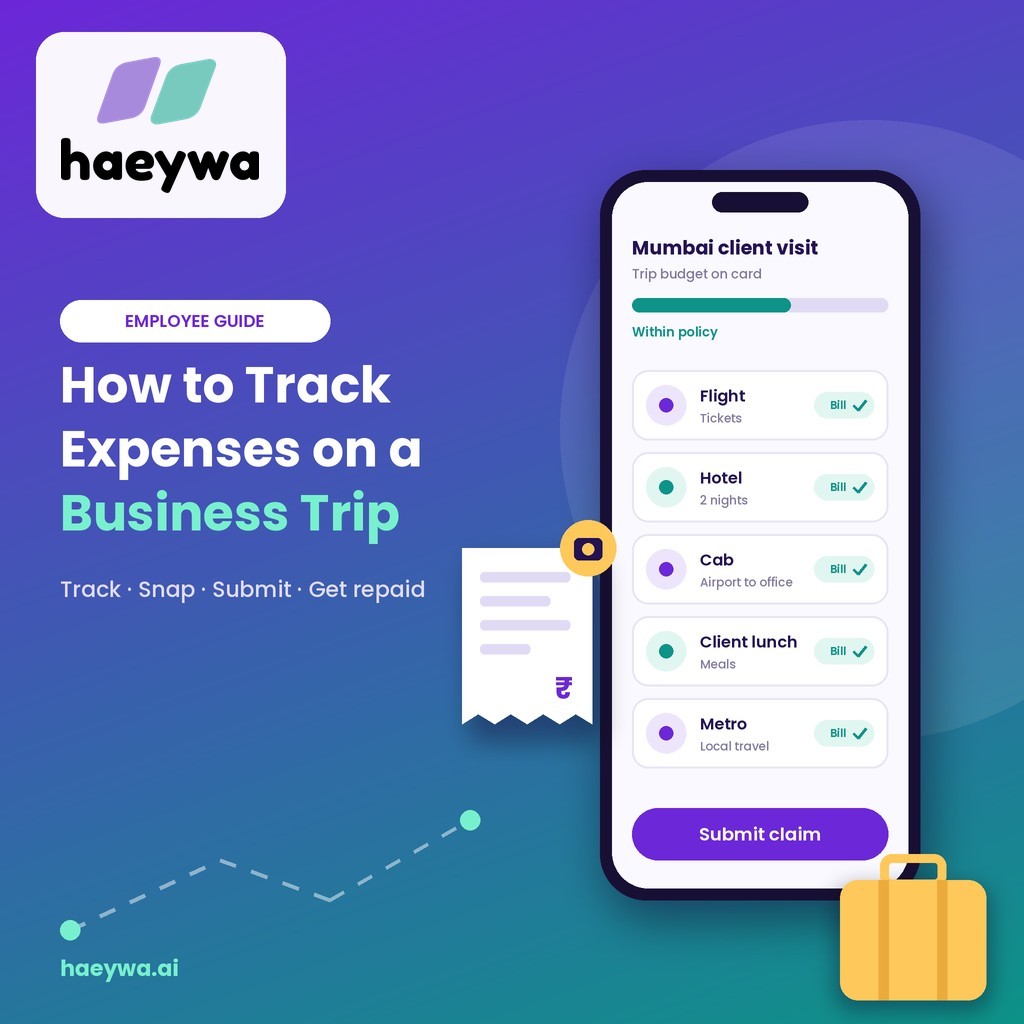
At haeywa, we hear the same story from employees who travel for work. The trip itself goes well, but the week after is spent hunting for a hotel bill, guessing what a cab ride cost and waiting to be paid back. Companies invest in travel and expense management software to fix this, but a lot still depends on how you, the traveller, track spends on the road. This guide gives you a simple routine for tracking expenses on a business trip, so your claim is complete, correct and approved first time.
Before You Leave: Know the Travel Policy
Five minutes with your company's travel policy saves hours later. Every business sets its own rules, usually in a written expense and reimbursement policy, and claims that break them are the ones that get stuck.
Before the trip, check these points, and ask your manager or finance team if anything isn't clear. Many companies now plan trips through a simple approval process, as explained in our guide to corporate travel management for SMEs, so get your trip approved before you book.
- Limits: hotel cap per night, daily meal limit and local travel rules.
- Travel class: which train, flight or cab options are allowed.
- Funding: whether you get an advance, a company card or pay and claim later.
- Proof: what kind of bill is accepted, and whether GST details are needed.
- Deadline: how many days after the trip you have to submit your claim.
What to Track on a Business Trip
Track every business spend, however small. Small amounts add up over a few days, and they're the easiest to forget.
- Tickets: flights, trains and buses, including booking or cancellation fees.
- Hotel: room charges and any allowed extras, such as breakfast or laundry.
- Meals: your own meals within the daily limit.
- Local travel: cabs, autos, metro, fuel, tolls and parking.
- Client costs: business meals or small purchases for a client meeting, with the purpose noted.
- Other work costs: printing, courier or internet needed for the job.
For each spend, note four things: the date, the amount, what it was for and the bill. Keep personal spends, such as a family dinner or shopping, completely separate.
Capture Receipts as You Go
The single best habit on a business trip is to record each expense the moment you pay. Waiting until the end of the trip is how bills get lost or faded.
- Snap a photo straight away: before the bill goes into a pocket or bag.
- Ask for a proper bill: with the vendor's name, date and amount, and the company's GSTIN if your policy asks for it.
- Save digital receipts: cab and booking confirmations in one folder or app.
- Add a short note: "client lunch with ABC Ltd" is far more useful than a bill with no context.
With an expense app, AI-powered OCR reads the amount, date and vendor from the photo, so you don't have to type anything.
Using a Travel Advance or Company Card
How you pay on the trip changes what you need to track.
- Travel advance: keep every bill, because you'll need to show how the advance was spent. Return any unspent amount quickly, or claim the difference if you spent more.
- Company card: each card spend still needs its bill. Spends appear automatically, but finance can't approve them without proof.
- Paying yourself: keep bills for everything and submit a reimbursement claim after the trip.
If you have a choice, a company card is usually the easiest option. You aren't out of pocket, and there's no advance to settle afterwards.
Still paying for business trips from your own pocket? Book a free demo and see how haeywa gives travellers a funded card and an app to track every spend.
Submitting Your Claim After the Trip
Submit your claim as soon as you're back, ideally within a day or two, while everything is fresh.
- Match every spend to its bill. Check nothing is missing.
- Pick the right category for each expense. Travel, hotel, meals, local conveyance and so on.
- Add the trip purpose. Which client, project or event the trip was for.
- Settle any advance. Show what was spent and what's left.
- Submit and track the status. Reply quickly if finance has a question.
Mistakes That Delay Reimbursement
Most delayed travel claims come down to a handful of avoidable mistakes:
- Missing or unreadable bills, especially faded thermal receipts.
- Spends over the policy limit without an explanation.
- Personal and business spends mixed on one bill.
- No purpose noted for client meals or extra costs.
- Claims submitted weeks after the trip.
- The same bill submitted twice, by mistake.
How haeywa Makes Trip Expenses Effortless
haeywa is a travel expense app built for teams on the move, so business trips need no paperwork at all.
- Funded before you travel: your trip budget is loaded on a corporate prepaid card with limits, so you don't pay from your own pocket.
- Snap and done: photograph each bill and AI reads the details.
- Policy checks built in: spends over limits are flagged straight away, not weeks later.
- Quick approvals: your manager approves from their phone.
- Fast repayment: if you do pay personally, claims are settled quickly.
For finance, every trip expense arrives complete, with its bill and approval, ready to reconcile.
Conclusion
Tracking expenses on a business trip doesn't have to be a chore. Check the policy before you leave, record each spend the moment you pay, use a company card where you can and submit your claim as soon as you're back. With a trip expenses app like haeywa, the whole routine takes seconds per spend, and you're repaid without the chasing.
Also Check
- What Is Reimbursement? Meaning, Types and How the Process Works
- How to Separate Personal and Business Spending (and the Tools That Help)
Frequently Asked Questions
What expenses can I claim on a business trip?
Usually tickets, hotel stays, meals within limits, local travel and work-related client costs. Your company's travel policy decides exactly what's covered and the limits.
What if I lose a receipt while travelling?
Tell your manager or finance team quickly. Many companies accept a written declaration or a digital copy for small amounts, but snapping bills straight away avoids the problem.
How soon should I submit travel expenses?
As soon as possible after you return, ideally within a few days and always within your company's deadline. Late claims are slower to verify and repay.
Can I use a personal card for business travel?
Yes, if your policy allows it, and you claim the money back with bills. A company card like haeywa's prepaid card is easier, as you're never out of pocket.
Make Every Business Trip Paperwork-Free
Book a free demo and see how haeywa lets your team pay, snap bills and submit trip expenses from one app.
Learn more →